Orwell and the Dispossessed
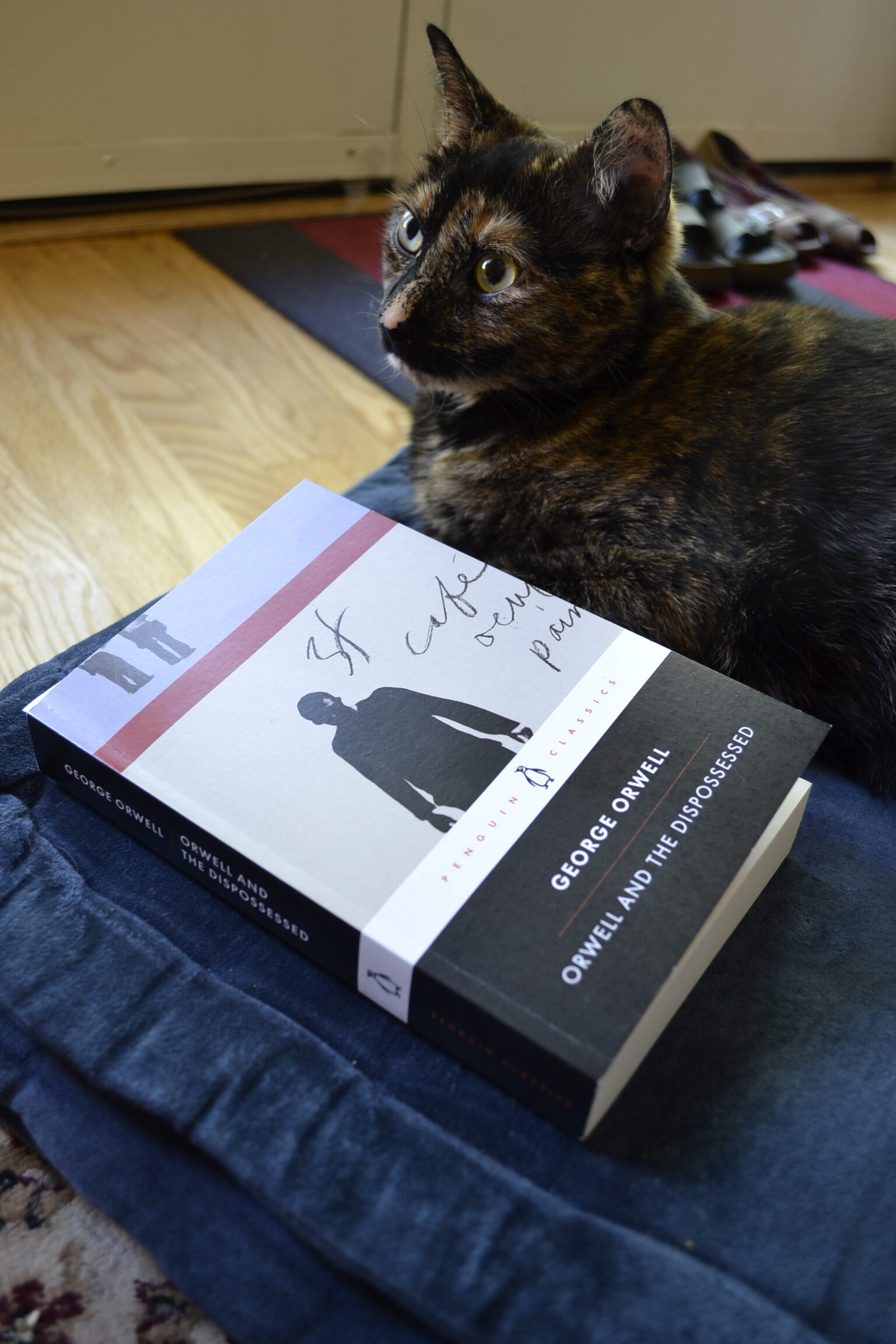
Orwell and the Dispossessed takes the reader beyond 1984 and Animal Farm and emphasizes that Orwell was a diverse and talented writer that had a lot to say and cut the reader to core at the same time as making them think.
Antiquarian and Classic Book Reviews
Rusalka is a tortoiseshell cat, with beautifully brindled fur and a silly Groucho-Marx moustache. She’s bossy, chatty, and very, very lovey.
She was adopted at ten weeks old in September 2020 and is the youngest cat in our household. People warned us about ‘tortitude’ when we adopted her — and she does have attitude, but not nearly as much as we expected.
Rusalka hates to be picked up. Except when she wants onto your lap, then you have to pick her up. Any other time, and she will stick her legs and claws out and flail like you’re murdering her. She goes where she wants to go, and she might be a little bit spoiled.
But you are guaranteed to be Rusalka’s friend. This cat has always been friends with everyone. She is friends with the vet. After her shots, she will rub against the vet’s leg to remind them that they are still friends. She is friends with the service technicians who fix our furnace. And the plumber. And anyone who visits. And her sisters most of all. Rusalka even gets along with the famously anti-friends Jabberwocky.
She is very serious when she plays, whether that’s chasing a string or screaming before running after a felt bee thrown down the hallway. Her favourite toy is the bee on the string, but we don’t play that very often. When she catches the bee on the string, she bites down and growls and gets very, very serious about keeping what she has caught.
She’s the biggest, cuddliest Mama’s girl, and Hargrave rarely gets to lie down and read without Rusalka insisting on being put on her lap.
Orwell and the Dispossessed takes the reader beyond 1984 and Animal Farm and emphasizes that Orwell was a diverse and talented writer that had a lot to say and cut the reader to core at the same time as making them think.
The Other is full of twists and turns and proceeds along at a fast pace — so fast that I could easily read it in the course of a long afternoon and evening.
To describe Abe’s The Face of Another as a horror novel would only be scratching the surface of what it truly delivers.
The amount of correspondence included here seems nearly silly when you think that this is before the age of internet and the two-line email and all of them — other than the telegrams and internal memos — required stationary, stamps, and envelopes.
I have a very old movie-tie in edition of The Amityville Horror and it was printed back when it was able to put the whole ‘based on a true story’ claim on the cover.
I often read as much about American politics as I do about the politics about my own country. Though it feels like I’m on the outside looking in when I read books like this, it to some extent feels closer than is comfortable as well.
my local independent bookstore called to inform me that my copy of the British Library’s (Tales of the Weird Collection) Chill Tidings had arrived. That made a Christmas in July post impossible to resist.
What drew me to this book initially was the simple fact that my local independent bookstore had it in stock and it was a mystery published in the late 1970s that was dubbed a classic.
The views of the river and the details of the water winding its way through the sleepy countryside makes the reader want to rent a boat immediately and get to any water close by.
Claire Boltwood is on such a trip across the country — driving herself and her father from Minneapolis to Seattle in a very nice car on some not very nice roads. Lewis describes not just the scenery but also the reality of flat tires, car repairs, getting stuck in mud, and unpleasant hotels.