Poor Folk
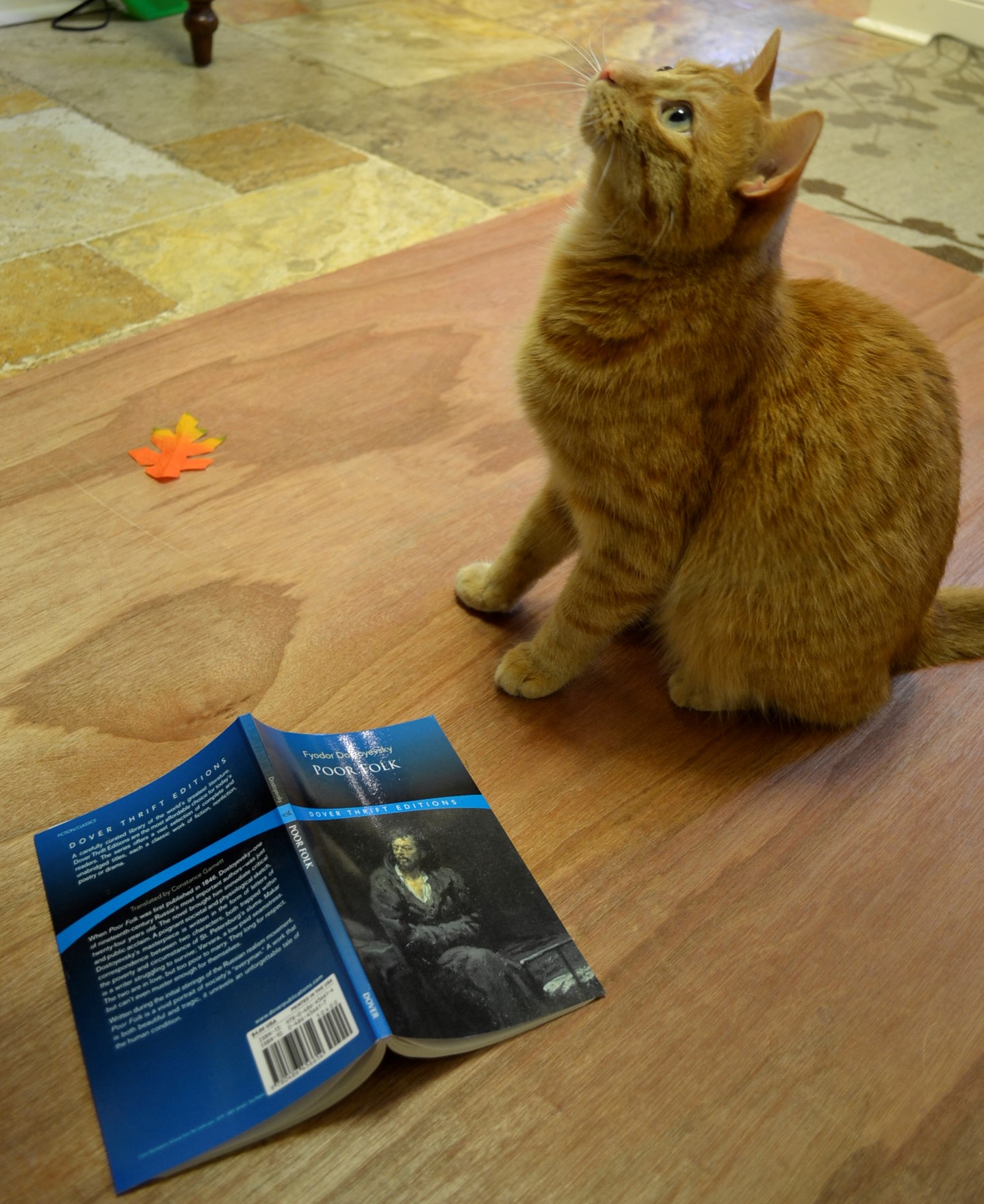
The narrative is a relatively simple one, but within it Dostoevsky’s writing really shines. This is a review of Dostoevsky’s Poor Folk.
Antiquarian and Classic Book Reviews
Bandersnatch is a scruffy orange tabby with a big, bossy personality. She is loud and demanding and never takes ‘no’ as an answer.
Adopted a year after Jabberwocky, Bandersnatch is the second youngest cat. Despite having been taken from a barn to a very nice shelter, she was a tough little biter. Just what we needed to play with Jabberwocky.
She does get along well with her sisters — especially Wesker.
Bandersnatch is Hargrave’s second little monster. You can usually find her running laps around the house, climbing up the wrong side of the tallest cat tree, balancing on someone’s shoulders, or dead asleep inside a cushy cat bed. She loves attention, and will literally climb you like a tree to get it.
Some other things she likes include margarine, feathers on a string, winning at wrestles, and folding her paws. Because she has such an attitude, Bandersnatch takes a great glamour shot.
The narrative is a relatively simple one, but within it Dostoevsky’s writing really shines. This is a review of Dostoevsky’s Poor Folk.
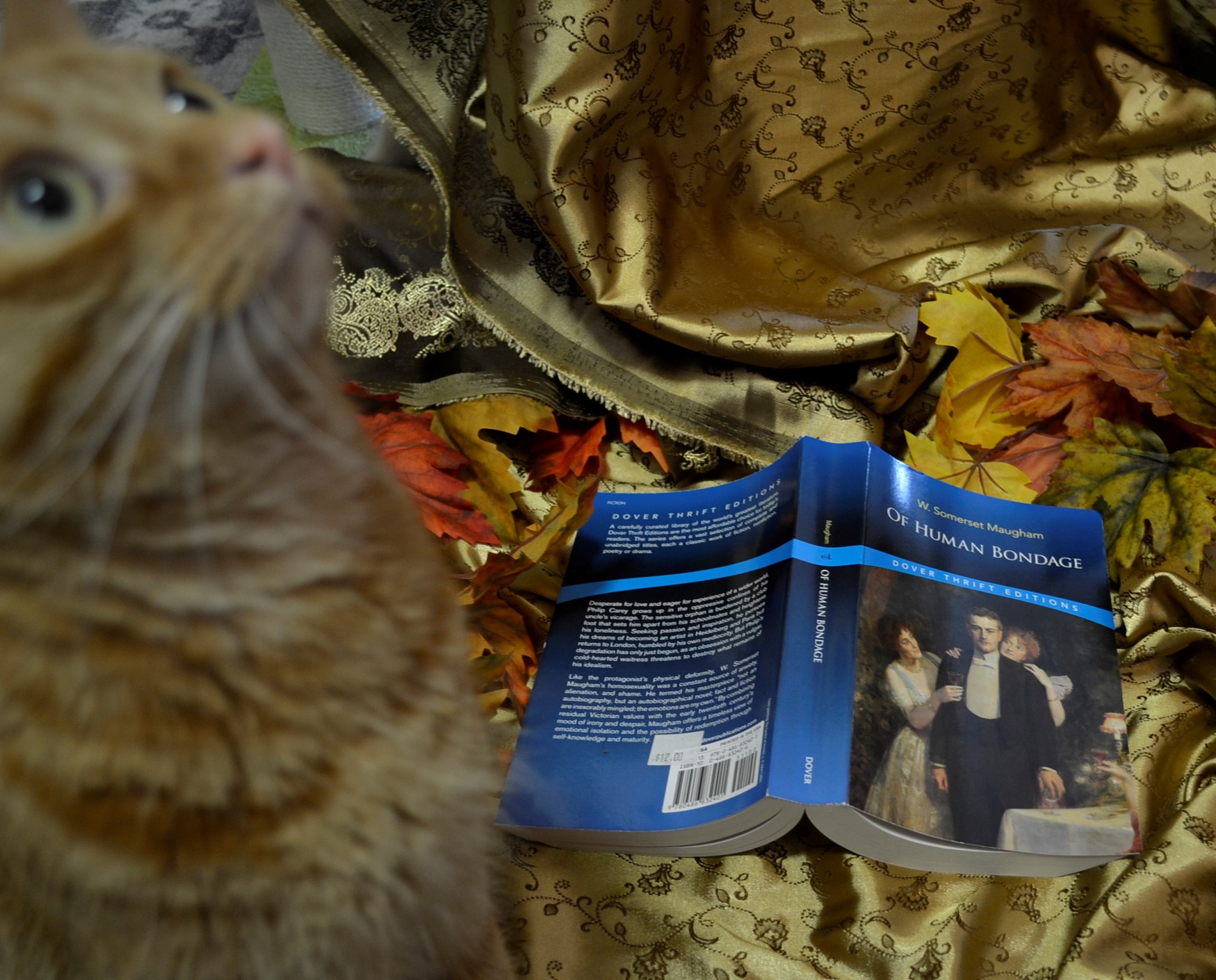
I was first introduced to this book via the 1934 film of the same name that was very loosely based on it. We watched it on Turner Classic Movies one evening and I thought perhaps that the novel would fill in some of the gaps that I saw in the film. This is a review of W. Somerset Maugham’s Of Human Bondage.
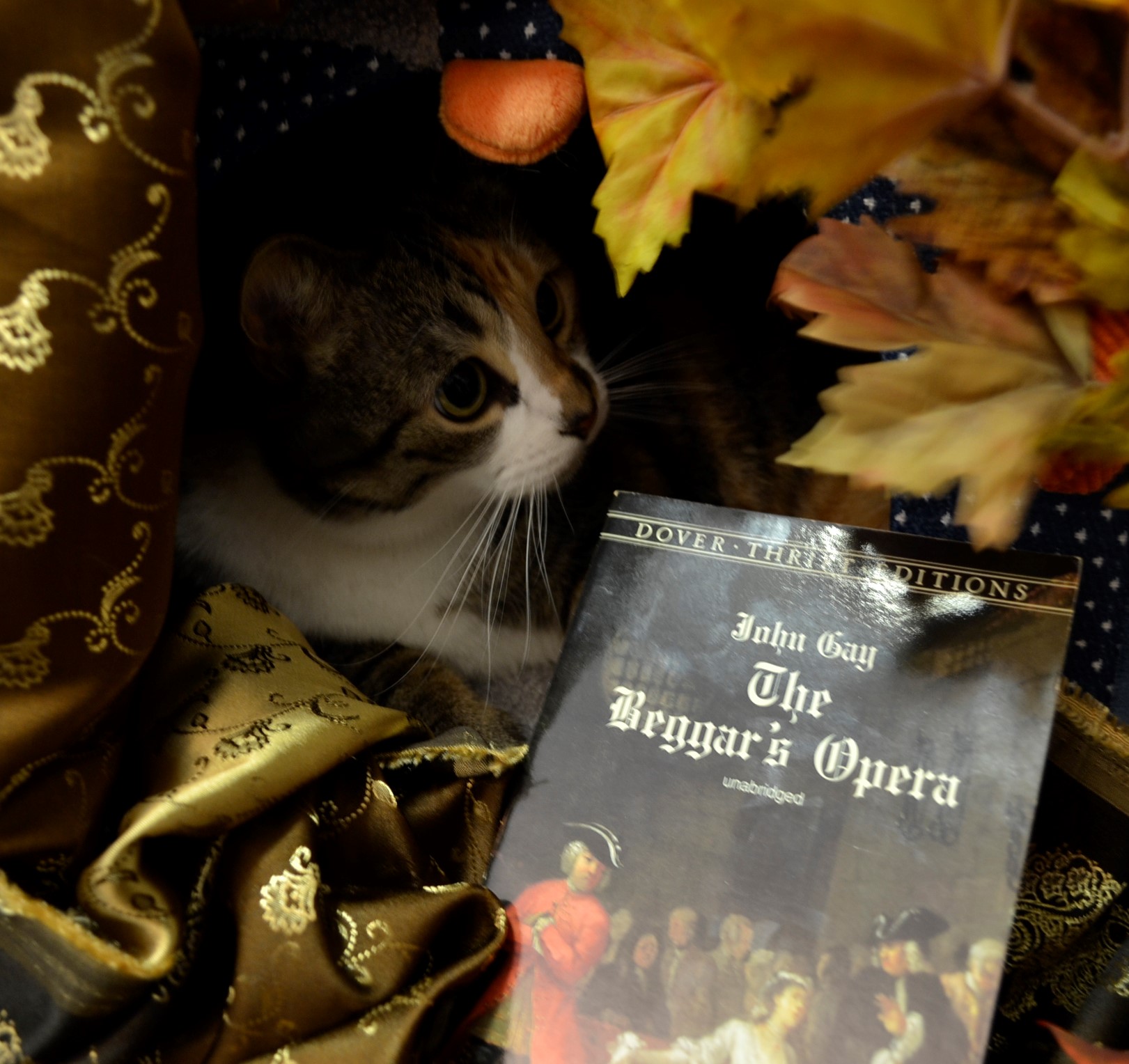
I’d actually heard of this book several years before finding it by chance on the shelf of the local bookstore. I couldn’t resist purchasing it, if only to find out why it was so heavily referenced. This is a review of John Gay’s The Beggar’s Opera.
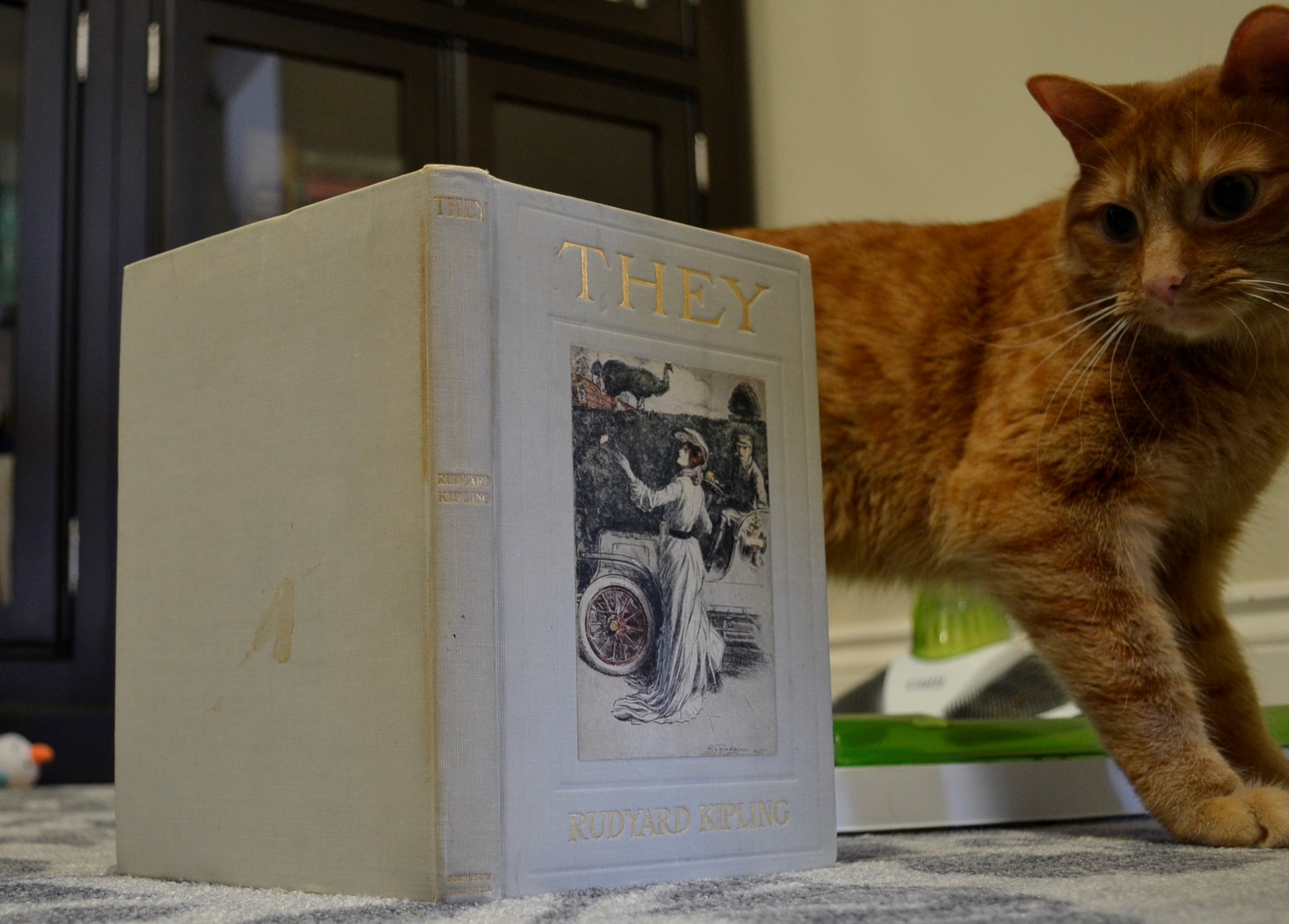
I found this copy in the antiquarian section of a used bookstore in a nearby city and it was a surprise. I’d never heard of the story before, but I couldn’t resist the beautifully bound book, with gold lettering, and a generous amount of very lush colour plates. This is a review of Rudyard Kipling’s They.
Though the novel is complete in terms of narrative, it’s not exactly finished per se. There’s a note in front of my edition that explains that the decision was made to publish the work because reading as much of Camus’ as possible helps readers and scholars understand who Camus was as a writer and his process. This is a review of A Happy Death.
I actually found this book in a used bookstore’s bargain bin and as such I wasn’t expecting much. But I was surprised both by the quality of the writing and the insight of this novel, especially considering when it was written. This is a review of Sarah Broom Macnaughtan’s A Lame Dog’s Diary.
Due to how many adaptations it has had and how prominent it is in the canon of classic literature, I thought it would be a staple of used bookstores or the bigger new bookstores. Well, it isn’t. This is a review of Victor Hugo’s Notre-Dame de Paris or The Hunchback of Notre-Dame.
As someone who reads classical literature — a lot of which was around before cameras were common or in some cases existent — instead of photographs, I see a lot of author portraits when I do research. This is a review of The Man of Feeling.
I spent a lot of time in front of the television as a child. It was part of my regular routine before going to school and after I got home. I used it to define days, hours, and seasons and to keep me company while I did homework or studied. My favourite programs (alongside Bugs Bunny, of course) were crime documentaries. This is a review of Emile Zola’s The Beast Within.
There is no singular process that recommends a book to me or by which I choose what to read when. My reading tastes can change with a given day or even a given hour — which is why I tend to read about eight to ten books at once. This is a review of The Bluest Eye.