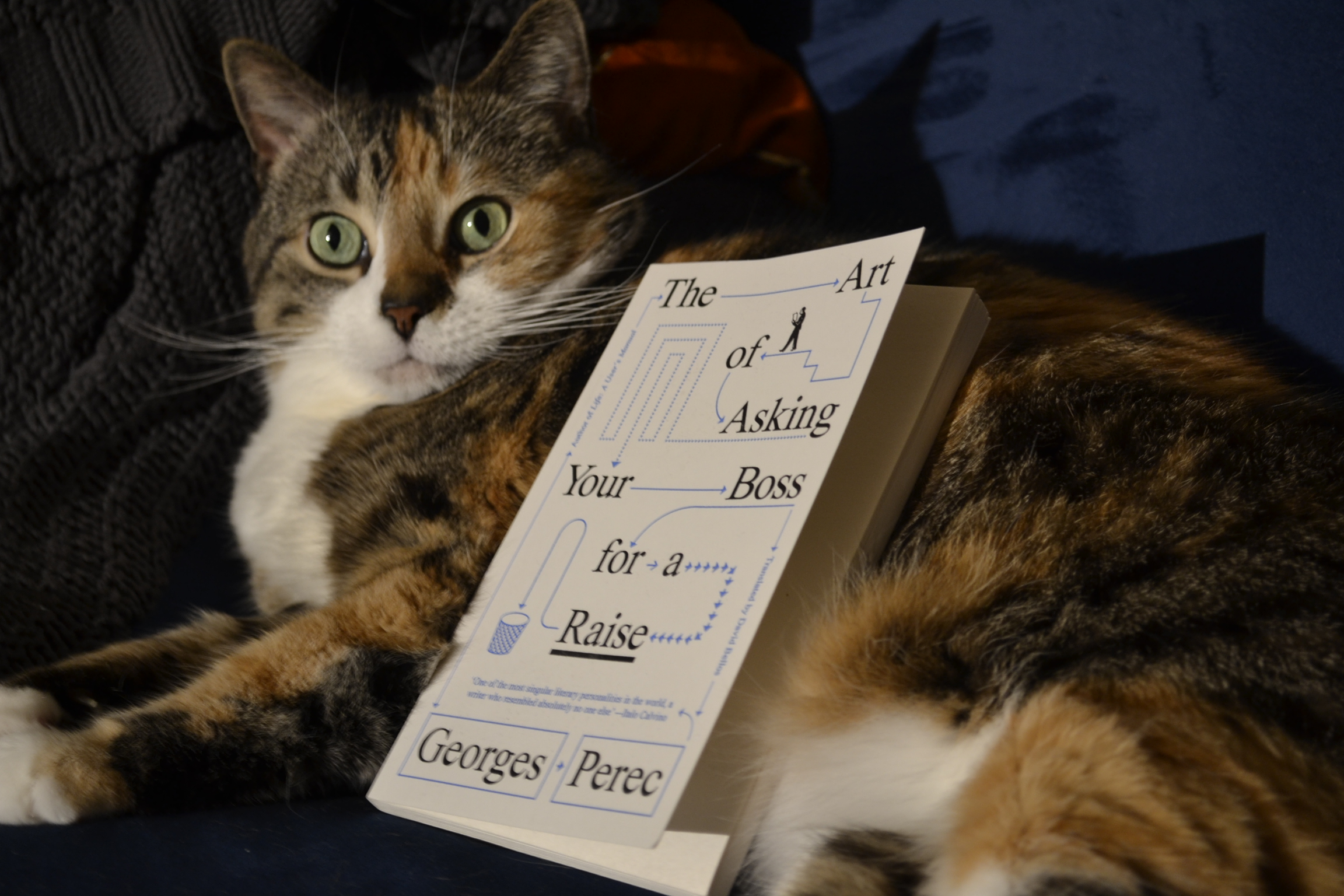
But What If the Boss is Me?
I’m reviewing a book about corporate culture, which I find that I have a strange relationship with. I used to work in academia, in retail, and in a hospital, so sometimes it feels like I have worked in many environments — none of them an office. When we started doing freelance work, I figured that corporate structure would be something I would just never have any experience with.
I was partially right. I still have never worked in an office. But we do occasional work for a couple of corporate clients. So I have the strange experience of being on the outside of the skyscraper, looking in. As such, I can appreciate humour about office politics but still feel distant from it. It’s like the best of both worlds. And then I wonder just why all of our lives are touched somehow by corporate and in what strange ways.
A Bit of Background
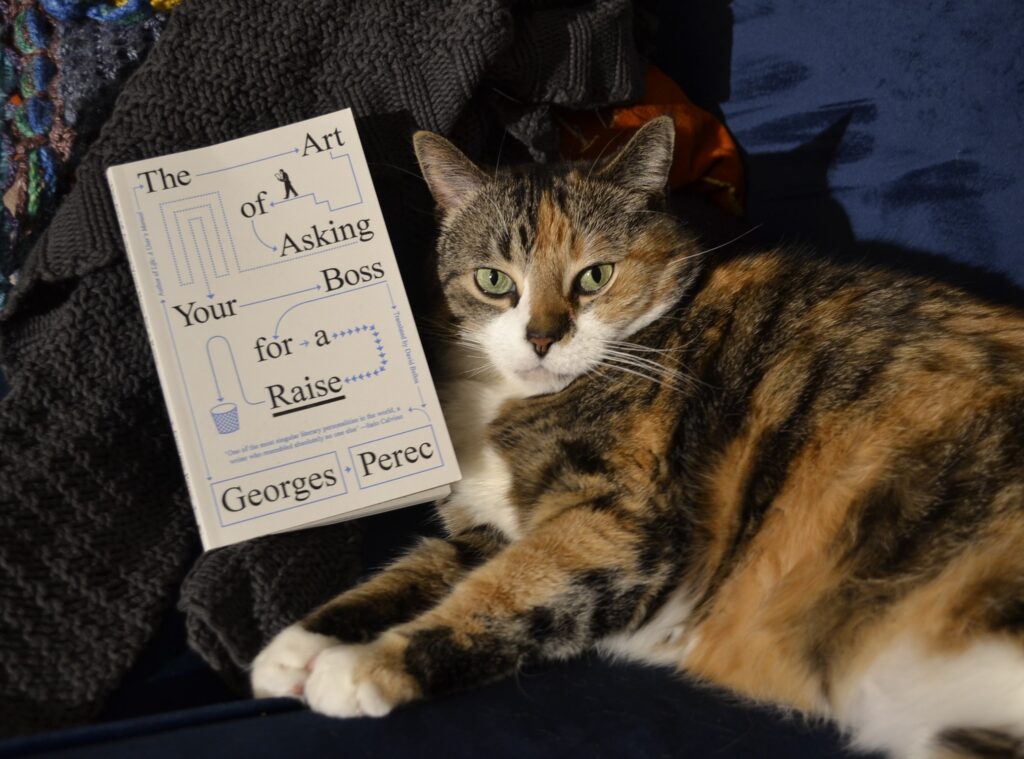
Georges Perec is a writer that defies categorization and has a body of work that includes essays, radio plays, and films. What seems to unite his various media is his love of wordplay and language as well as just a love of play in general. He even wrote crosswords for the newspaper. In 1968, IBM asked Perec to explore the computer and its relation to literature. What resulted from that question was a program that followed the steps of an employee asking for a raise which in turn became this novel.
Perec’s family was devastated by the Second World War, and it takes a lot to take tragedy and not only write about it but also to transcend it and attack life with gusto and literature with joie de vivre.
An Experience and a Novel
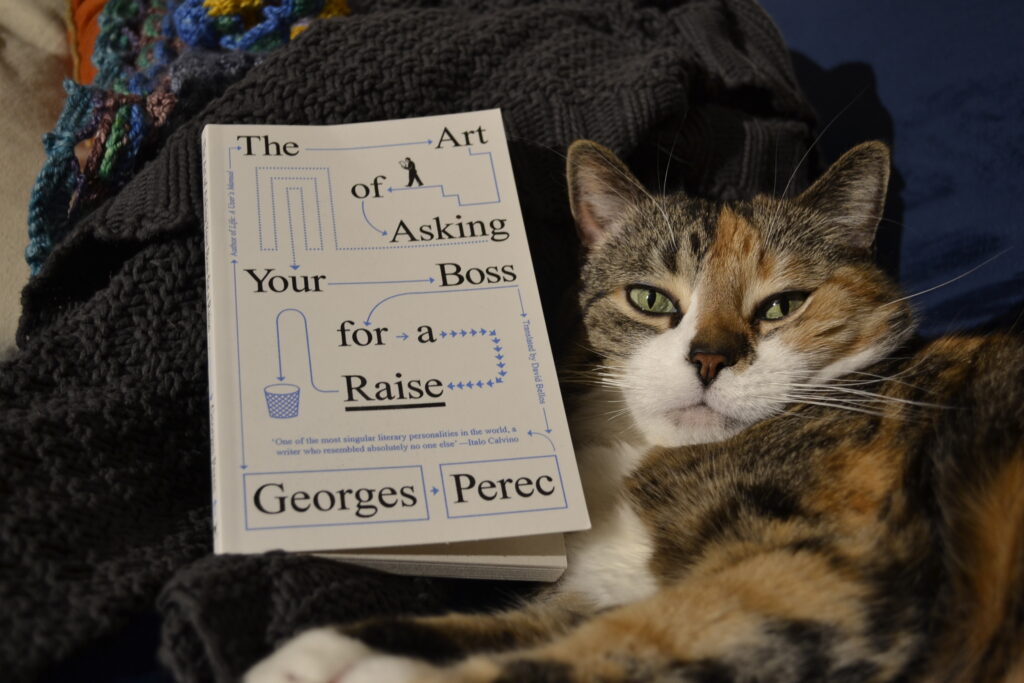
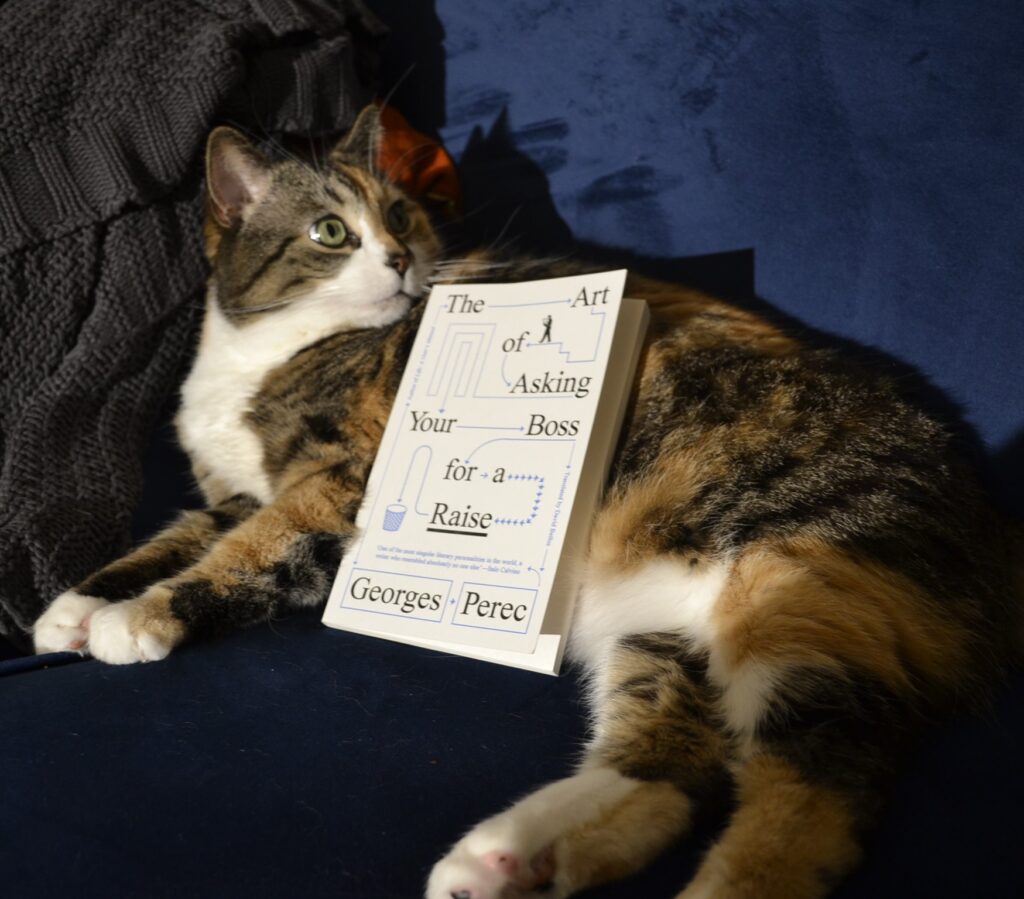
It’s best not to come to Perec’s The Art of Asking Your Boss for a Raise thinking that you’re going to encounter a traditional novel about a low-level employee asking his boss for a raise. Instead, you will get a twisting journey where a story of a man asking for a raise branches off into the possibilities of lunches and meetings and moods and conversations. It’s as complex as an Escher drawing, but also as funny as your favourite office sitcom. This novel is more akin to reading a chose-your-own-adventure answer key — and I think for what it is and how it was created, I wouldn’t want it to be anything else. But I can understand that the style might be off-putting for some readers.
A Fable About Modern Life
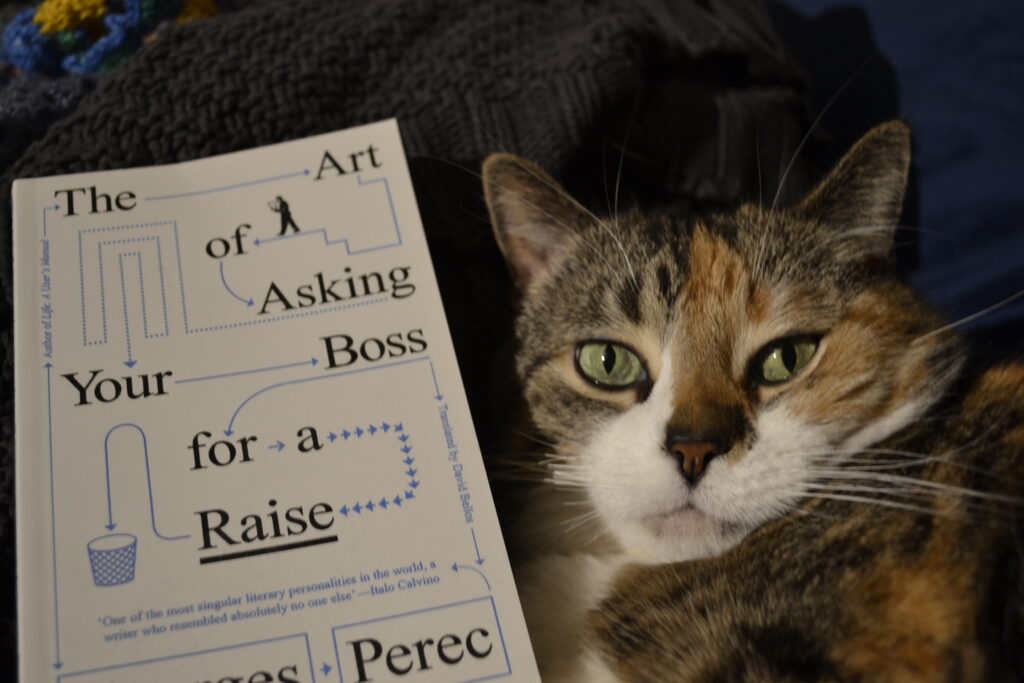
I was actually surprised that this book was produced before the late 1970s and 1980s when modern office culture was truly born. It seems so prescient and so utterly relevant to even the present-day foibles of bosses and employees, lunches and meetings. Unbelievably, this book was written before email, but it contains all of the feels inherent in the phrase ‘this meeting could have been an email’.
It goes to show that even literature from nearly sixty years ago can still have all the life and all of the belly-laugh relevance as a contemporary comedy. Modern life is sometimes not as modern as we believe it to be and there is truth to the adage that the times may change but the people certainly do not.
Storm Warning
Today is a weird weather day. There’s sunshine but warnings about a coming blizzard. So I’m sitting here grateful for the sun, but with gritted teeth. This winter has just been so grey and so full of storms. I need some sun on my face and some outside time that does not involve a shovel and digging out a vehicle.